

They Told Her to Become the Son. She Built a Company Instead.
Mansi Jain spotted a gap in the jewellery market while working in New York. It took a death in the family for her to act on it. Peacoski Jewels now sits in the space between gold most Indian women cannot afford and costume jewellery most of them do not want.
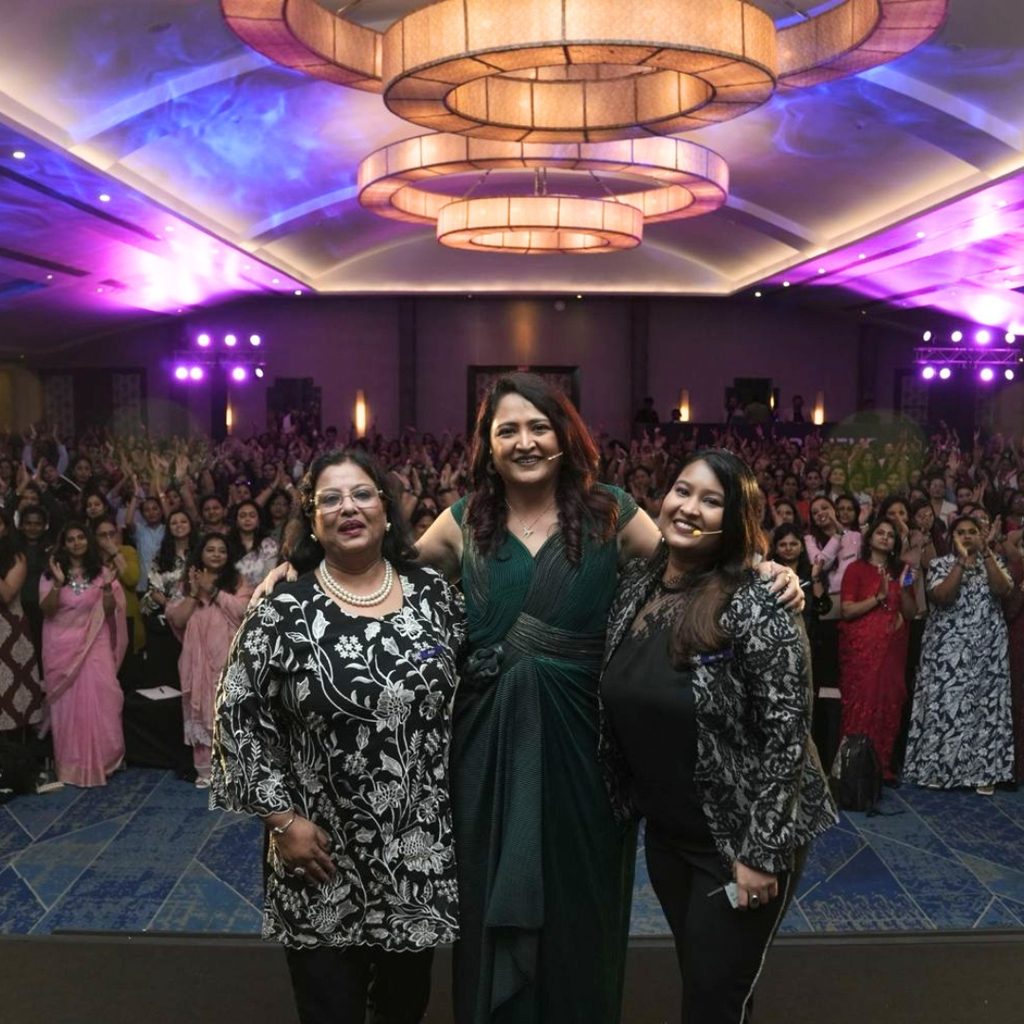
There is a sentence that gets said in Indian homes after a family loses a son, and it is always said kindly.
“Now you must become the son of the family.”
Mansi Jain was twenty-eight when she started hearing it. Her younger brother had died. For weeks the house stayed full of relatives and neighbours, and more than one of them handed her that line the way you would hand someone a blanket.
She understood what it was offering. In a great many Indian families the phrase is not a metaphor — the son is the one a family’s continuity is assumed to run through, in name, in property, in the care of ageing parents. When a family is left without one, the sentence functions as a promotion.
Mansi could not make it sit. Not because she was unwilling to carry the responsibility; she was, and largely has. What she could not accept was the wording, and the assumption buried inside it that responsibility had to arrive under a man’s name before anyone would treat it as real.
“Why be the son,” she asks, “when you can be the daughter of the family?”
Four years on, that question has a balance sheet attached to it.
The gap in the middle
The commercial idea predates the grief. It formed in New York, where Mansi spent years working inside the jewellery trade and kept noticing the same shape in the market.
At one end sat fine jewellery: gold, diamonds, price points that meant a woman bought one significant piece in a decade or inherited one and kept it in a locker. At the other end sat costume jewellery — cheap, light, visibly cheap, built to survive a season.
Between the two, almost nothing. A customer who wanted the presence and detail of fine jewellery but could not justify the metal had two options: overspend, or settle for something that looked exactly like what it cost.
Mansi read that emptiness as an oversight rather than a law of nature. Premium artificial jewellery — properly designed, properly made, priced in the thousands rather than the lakhs — was a category that ought to exist and largely did not.
What she did not have was a reason urgent enough to leave a career and build it. Loss supplied one.
The house that answered differently
The decision to start was made in the worst year of the family’s life, and Mansi is insistent that the story is told with her parents in it.
While the wider world was informing her that she would have to become the son, her mother and father were doing the opposite. They did not ask her to replace anybody. They backed their daughter to go and build something, and they did it while burying their own child.
“They were grieving too. And they still showed up for me, every single day.”
Her first structural decision was to bring her mother in as a partner. She asked Anju Jain to build the company with her — not out of necessity, but because she did not want the two of them grieving the same person in separate rooms of the same house. The business became the structure they rebuilt themselves inside.
Her father has backed it from the start, believing it would work well before there was evidence that it would.
Peacoski describes itself in a line that is unusually literal for a brand: built by women, run by women, created for women. The company is run by Mansi and her mother. Her father, by choice, stands behind them and lets them lead — which makes the point more convincingly than the slogan does.
The positioning bet
Peacoski is built in the middle Mansi identified, and everything about the operation follows from that decision.
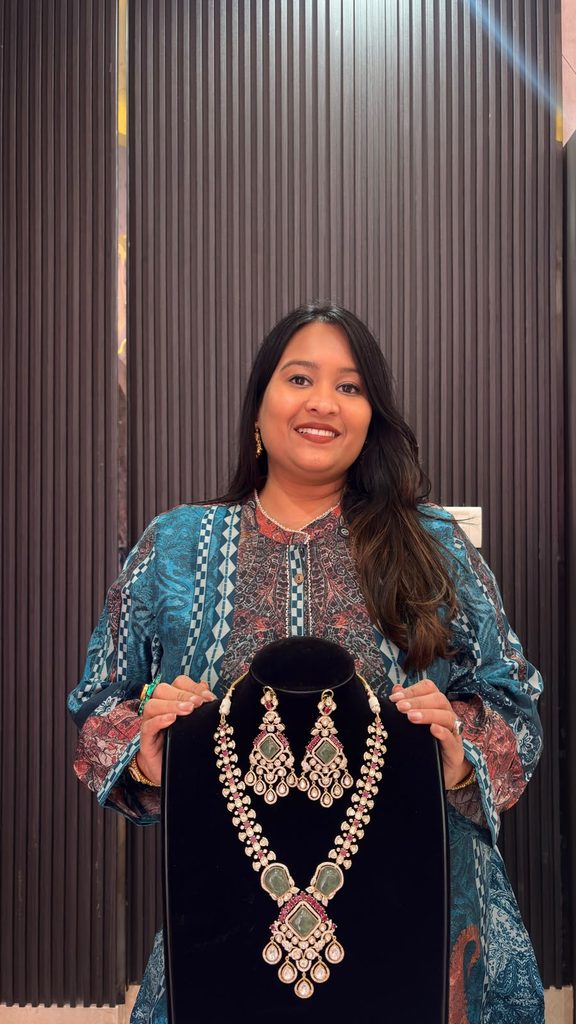
The company produces premium artificial jewellery rooted in India’s heritage craft traditions: Jadau, Kundan, Polki, Meenakari, Temple and Rajwadi work. These are labour-intensive forms — Jadau, in which stones are embedded into soft metal without adhesive, demands a patience modern manufacturing has little room for.
Materials are specified to survive close inspection: semi-precious stones, high-grade American diamonds and cubic zirconia, moissanite, polki and pearls. Not the cheapest stone that photographs adequately, but the best available simulant, set properly.
The catalogue runs across necklace sets, earrings, bangles, bracelets, rings and pendant sets, priced from roughly ₹1,300 to ₹14,000, and is organised as much by occasion — mehendi, reception, festive, office — as by category.
The target customer is specific: a woman who wants jewellery that reads as fine jewellery, and who is not willing to announce her budget by wearing something that obviously isn’t.
Where the advantage actually sits
The defensible part of the business is not the design. It is the supply chain.
Peacoski does not use a costume-jewellery factory approximating fine work from the outside. Its pieces are made by karigars who work in real gold and diamond jewellery — artisans from the fine-jewellery trade, applying the same techniques, tools and standards they bring to precious commissions.
The hands are the same hands. What changes is the material they are setting.
That distinction shows up precisely where buyers form judgements: the polish, the texture of the metal, and the way stones are seated and spaced, which is the detail that gives cheap jewellery away faster than anything else. A karigar who spends his working life setting diamonds sets a cubic zirconia the same way, because he does not know another way.
It is also the hardest element for a competitor to replicate quickly. Design can be copied within a season. Access to fine-jewellery artisans, and a relationship strong enough to keep them working on non-precious commissions, cannot.
Mansi is precise about what is being sold, and treats that precision as a form of respect. Peacoski does not sell gold. It does not sell diamonds. It sells the craftsmanship of goldsmiths in materials a woman can afford to wear on an ordinary Tuesday. The craft, as she puts it, is real even when the stone is not.
Her internal standard is blunt: a customer should be able to wear a Peacoski set to a wedding, be complimented on it all evening, and never once be asked what it is.
Selling a product that has to be seen
A premium positioning creates a distribution problem. The higher the price point, the more a customer wants to inspect before committing — and a photograph cannot convey how a set sits on a collarbone, how the finish reads in daylight, or how a pair of chandbalis moves.
The conventional solution is a market trip: an afternoon between shops, trays pulled out and pushed back, someone hovering while you hold a set against your face under bad lighting. Mansi wanted the category to stop requiring that.
Peacoski’s answer is a live video consultation. A customer can ask to see pieces in real time — brought out, turned in the light, shown close enough to inspect the stone-setting, compared against alternatives while she watches.
Commercially it does two things. It closes the trust gap that stops high-value online jewellery purchases, and it doubles as a confidence signal: a brand whose entire claim is that the work survives scrutiny is inviting the customer to scrutinise it live. Photographs can flatter. A video call cannot.
The brand pairs it with styling guidance, which addresses the question customers actually have — not is this beautiful but will this work with what I am wearing. A customer describes the outfit and the occasion, and is advised on pairing, length and colour against the fabric.
The third piece is timing. Much of the reason women end up in a market at the last minute is simply the clock: a function on Saturday, the outfit settled on Wednesday, nothing online arriving before it matters. Peacoski runs a two-day express option, at a small additional charge, which converts a panic purchase into an ordinary one.
Taken together, it is a deliberate replacement for the showroom rather than a set of add-ons.
The unglamorous half
The category has a reputation problem, and it is largely earned. Artificial jewellery is where stones work loose within a month and plating wears through at the clasp. Most Indian women have been disappointed by it at least once, which is exactly why so many stopped trusting it — and why a premium claim in this category is met with scepticism by default.
Peacoski’s response is a rigorous pre-dispatch check on every piece: setting, polish, finish, clasp. The operating principle is that the customer should never be the person who discovers a fault.
Packaging follows the same logic. Cheap jewellery arrives in a polybag, and the polybag prices the product for the buyer before she has opened it. Peacoski ships in packaging substantial enough to function as a gift box on its own, which matters commercially as well as emotionally: gifting is a significant share of how jewellery is bought in India, and a box that needs no wrapping makes the brand a default choice for a wedding, a birthday, a daughter-in-law’s first Diwali.
The through-line is consistent. If the karigar does not downgrade the setting and the consultation does not downgrade the buying, there is no case for cutting corners in the last thirty seconds — the part the customer actually remembers.
What she is building toward
Mansi separates the long-term vision from the operating mission, and the distance between them is the honest part.
The vision is broader than jewellery: a market, and a culture, in which no daughter is asked to become a son in order to be trusted with a legacy.
The mission is what the company works on daily — making India’s heritage craft traditions wearable and affordable for ordinary women, and building a business that does it with women at every level.
Near-term, the focus is depth and range: expanding what the workshop can execute, pushing detail closer to the originals, and growing the catalogue without letting quality drift, which is harder than it sounds at pace.
The longer ambition is preservation. Mansi wants Peacoski to be part of the reason a difficult, fading craft is still being practised in twenty years — because enough commercial demand was sustained to make it worth someone’s while to learn it.
What it adds up to
Stripped of the story, the business is straightforward.
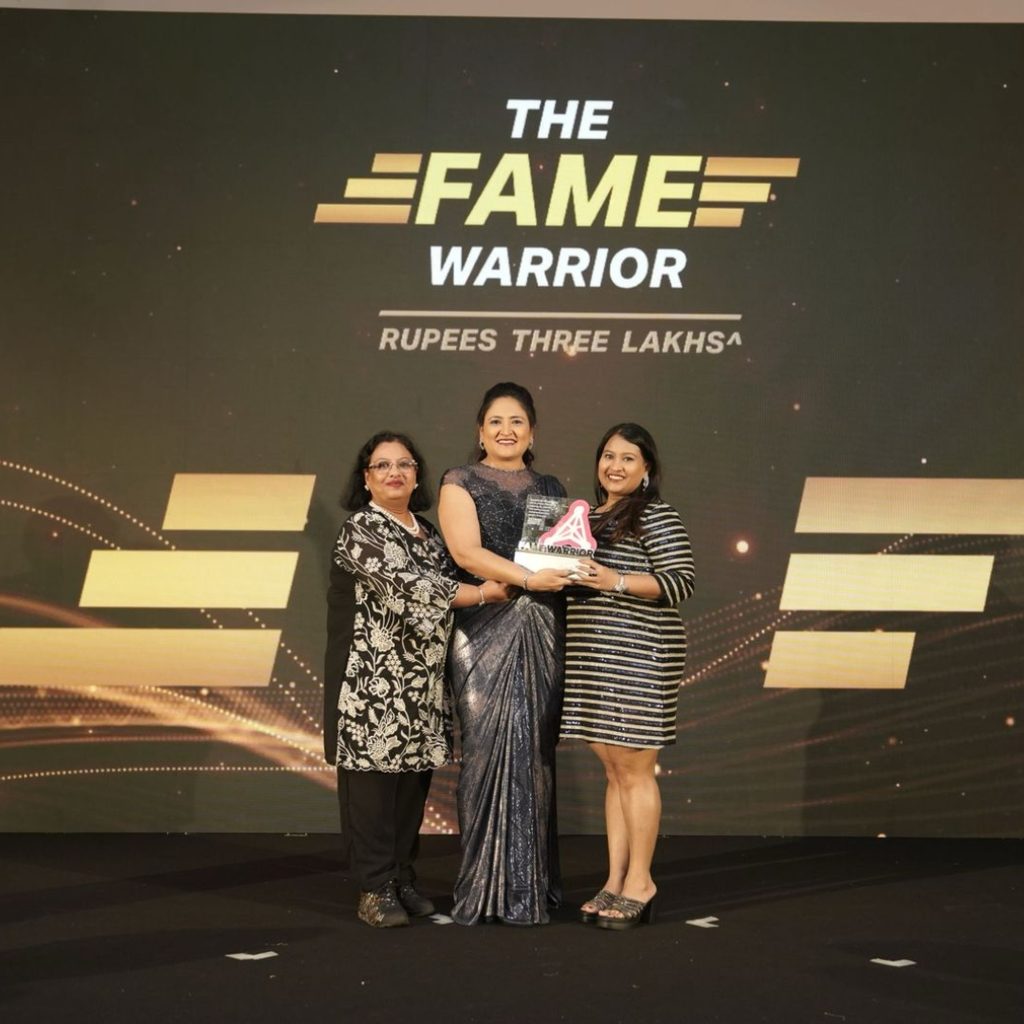
Peacoski Jewels is a Gurugram-based premium artificial jewellery brand founded by Mansi Jain and run with her mother, Anju. It occupies the gap between fine jewellery most women cannot afford and costume jewellery most women do not want. It works in semi-precious stones, high-grade American diamonds and cubic zirconia, moissanite, polki and pearls, made by artisans who otherwise set real gold and real diamonds. The catalogue spans necklace sets, earrings, bangles, bracelets, rings and pendant sets across the Jadau, Kundan, Polki, Meenakari, Temple and Rajwadi traditions, priced from roughly ₹1,300 to ₹14,000. Customers can view pieces on a live video call and request styling advice before buying, a two-day express option covers last-minute orders, every piece is inspected before dispatch, and everything ships in packaging built to be handed straight over as a gift.
Every piece is named after a woman. Kundavai. Manjari. Tejomayi. Arohana. Camille. Florenza. A company that began with a question about whether a daughter counts was never going to give its designs numbers.
And underneath the positioning and the supply chain sits a sentence handed to a twenty-eight-year-old in a house full of people who meant well by it.
“Now you must become the son of the family.”
She never did. She did the job as the daughter instead, with her mother beside her and her father behind her, and built a company that would not exist if they had not lost him.